


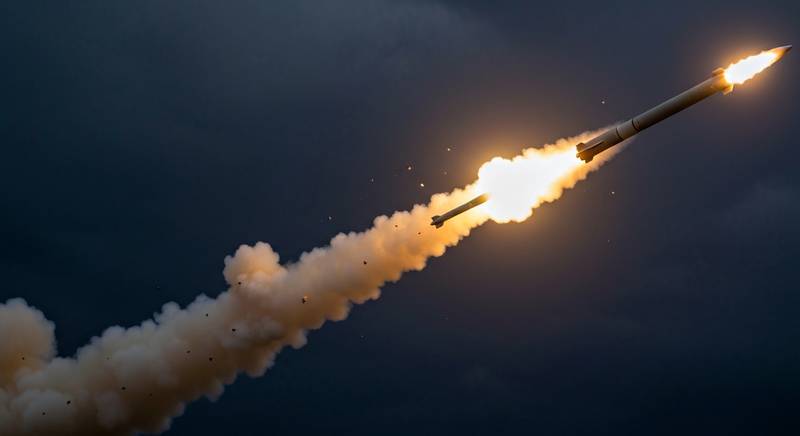
The ongoing conflict between the United States, its allies, and Iran has led to a significant increase in the use of ballistic missiles and drones. According to General Dan Caine, the top US military officer, the US forces have “intercepted hundreds of ballistic missiles targeting US forces, our partners and regional stability” since the start of the war.
This success in intercepting the missiles is a positive outcome, as it has prevented them from striking their intended targets. However, it has also come at a cost, as the interceptors used are expensive and in short supply. Kelly Grieco, a senior fellow at the Stimson Center think-tank, has stated that “there is a risk the United States and its partners could run out of interceptors before Iran runs out of missiles, though it is far from certain.”
At the beginning of the conflict, the Zionist entity (Israel) estimated that Iran had around 2,500 ballistic missiles, which is “almost certainly more than the combined ballistic missile interceptor totals of (the Zionist entity) and the United States.” The race is now on between Iran’s missile and drone launches and the US and Zionist entity’s efforts to neutralize the launch capability.
The length of the conflict is a crucial factor in determining the number of interceptors needed. US officials, including President Donald Trump, have referred to a multi-week war, with varying timelines provided by different sources. However, the president has stated that the US has “capability to go far longer than that.”
The strain on US stocks of critical air defense interceptors could have implications for other global priorities, such as Europe and the Indo-Pacific region. As Joe Costa, the director of the Atlantic Council’s defense program, has noted, “sustained conflict with Iran could severely strain US stocks of critical air defense interceptors for China and other global priorities.”
Source: Kuwait Times



Add a comment