


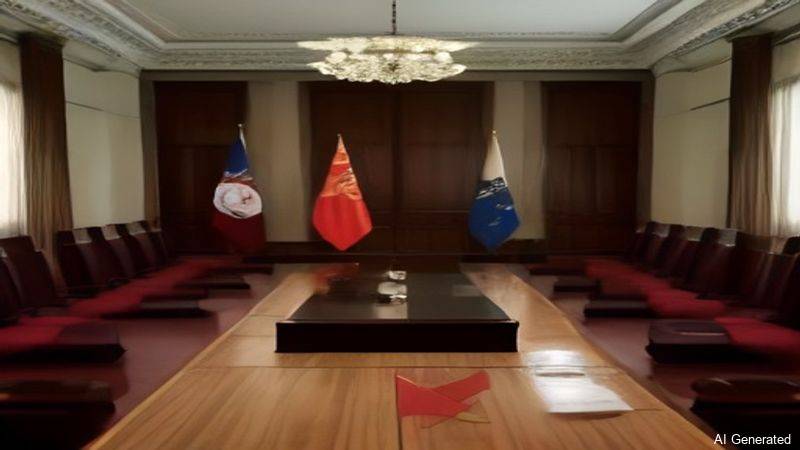
Chinese President Xi Jinping visited Cairo on Wednesday, his first trip to Egypt in a decade, where he urged Middle Eastern countries to resist “external interference” and offered Beijing’s support in protecting regional maritime shipping amid the US-Iran conflict.
During meetings with Egyptian President Abdel Fattah al-Sisi at Cairo’s Ittihadiya presidential palace, where Xi received a 21-gun salute, the Chinese leader emphasized regional autonomy. “We must uphold the principle that the people of the Middle East are the masters of their own affairs, oppose external interference (and) support regional countries in strengthening dialogue on peace and security,” Xi stated, according to Chinese state news agency Xinhua.
Both leaders discussed the six-month US-Iran conflict and called for “diplomatic solutions” and a “comprehensive agreement to end the war”. Xi pledged that China “stands ready to work with countries in the region to safeguard the security of international shipping lanes, advance development cooperation… and eliminate the breeding grounds for conflict”.
The visit included significant economic announcements. Egypt and China, both BRICS members, signed an agreement to launch the third phase of their industrial zone at the Suez Canal. The zone currently hosts 200 companies with investments worth around $4 billion. Additional agreements covered China’s Belt and Road Initiative, information technology, transport, industry and supply chains. The two nations also agreed to expand cooperation on data centres, cloud computing, semiconductors and critical metals supply chains, while increasing use of their national currencies in trade.
Across Cairo, a city of more than 26 million people, Chinese and Egyptian flags decorated major streets alongside billboards featuring both leaders. Xi later visited the Grand Egyptian Museum near the Giza Pyramids.
According to Middle East Institute analyst Mirette Mabrouk, China is expanding its regional influence at a time when US engagement appears uncertain. For Egypt, a major US military aid recipient and longstanding regional mediator, deepening ties with China represents a strategy to diversify partnerships rather than depend on a single power. Egyptian President Sisi recently published an op-ed emphasizing Cairo’s “independent foreign policy”.
The visit comes as Washington has threatened expanded sanctions targeting Iranian interests and potentially Chinese banks. China, a major Iranian oil buyer, has committed to protecting its economic interests while simultaneously strengthening relationships with US-aligned regional nations ahead of an expected meeting between Xi and US President Donald Trump.
What This Means for Expats: Expats in Kuwait should monitor these shifting regional dynamics, as increased Chinese investment and influence in the Middle East may create new business opportunities and partnerships, while also reflecting broader geopolitical changes affecting the Gulf region’s stability and economic direction.
Source: Kuwait Times








Add a comment