


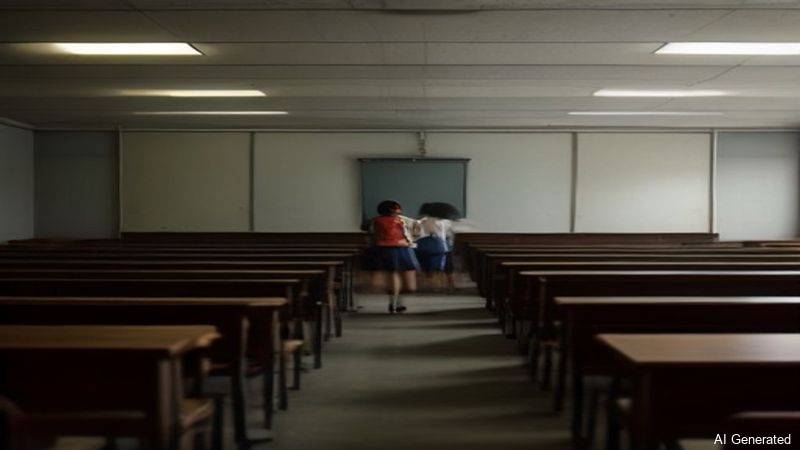
About 3,000 junior and senior high school students at Carlos F. Gonzales High School north of Manila participated in an active shooter drill on Thursday, barricading classroom doors with tables and chairs, drawing curtains, and switching off lights before crouching under tables for protection.
The nationwide drills are part of a broader push by the Department of Education to strengthen security following two rare school shooting incidents in the Philippines in recent months. In a country where schools regularly conduct exercises for earthquakes and fires, active shooting drills represent a new security measure.
“We have already almost perfected our fire and earthquake drills, and this is something new, so we need to do this kind of exercise,” Education Undersecretary Malcolm Garma told reporters. “Through this kind of exercise, we want our schools to be aware, to be able to recognize these kinds of threats and to be able to respond.”
The 12-minute drill at Bulacan included participation from police, emergency responders, and around 250 school staff and teachers. Teachers guided students with their arms raised—a measure to show they were not carrying weapons—from classrooms to the covered court, where school staff provided psychological assessment and parents collected their children.
Roy Fama, a teacher at Carlos F. Gonzales High School, acknowledged his initial fear but said participating in the drill helped reduce anxiety. “I also got scared when I heard that there will be drills like this, but participating in the drill is a step to lessen that fear and to prepare us and our students,” he said.
The drills were initially scheduled last month but rescheduled due to bad weather and after mental health advocates warned that hyper-realistic drills can cause lasting psychological harm to students. The Department of Education updated its drill guidelines, prohibiting hyper-realistic elements of active aggressor role-playing and graphic threat simulations. Instead, drills are triggered by a “distinct early warning alarm, separate from standard fire or earthquake signals, to build procedural muscle memory without creating distress.”
Despite these changes, some parents remain hesitant. April Tapion expressed concern that the drills might make her Grade 5 and Grade 8 children view the world as fearful. Karina Mallonga, director of the Infant Jesus Academy Kalibo Campus, suggested schools focus instead on strengthening guidance programs and encouraging students to speak with advisers.
Interior and Local Government Secretary Jonvic Remulla, who observed the Bulacan drill, emphasized that the exercise improved coordination among local police and emergency units. “I am very confident that we will respond better (now),” Remulla said.
What This Means for Expats: Expat families with children in Philippine schools should be aware that active shooter drills are now part of school safety protocols, with updated guidelines designed to minimize psychological distress while building emergency preparedness.
Source: Kuwait Times

Add a comment