


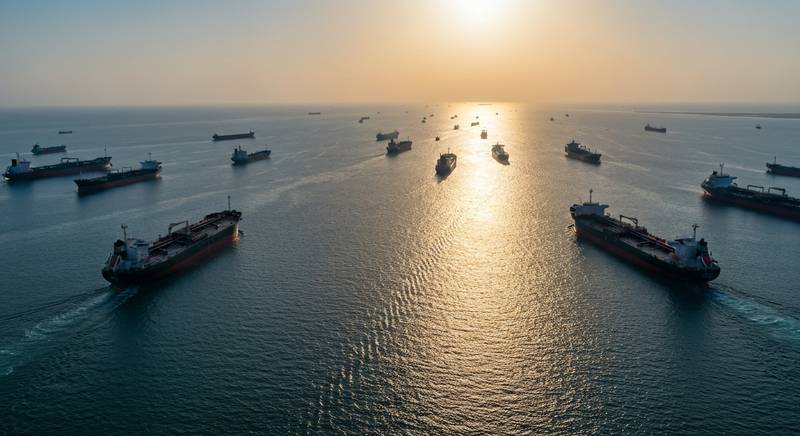
Kuwait Faces Risks from Strait of Hormuz Closure, but Massive Financial Assets Provide Cushion
A new report by S&P Global Ratings has warned that Kuwait remains highly sensitive to oil price fluctuations and heavily dependent on export flows through the Strait of Hormuz. However, the agency stressed that Kuwait’s massive global financial assets provide it with a relative capacity to absorb shocks.
S&P said that any prolonged closure of the Strait could pose tangible risks for several regional economies, even though hydrocarbon-producing countries may benefit from higher energy prices in the short term. The agency upgraded its assessment of the current crisis from a “high” to a “severe” scenario under its stress frameworks, increasing the likelihood of credit deterioration across multiple sectors.
The report noted that the conflict is already disrupting trade and supply routes—particularly energy exports via Hormuz—while also affecting aviation due to regional airspace closures. S&P explained that the effective closure of Hormuz transmits credit pressures through trade flows, capital movements, tourism, and borrowing costs. Issuers with near-term refinancing needs face heightened risks as financing costs rise.
The agency outlined varying levels of vulnerability across the region, with Bahrain and Qatar having the largest net external debt positions and potentially requiring government or regional support under worsening conditions. Shipping companies, airlines, tourism operators, and logistics firms are also under pressure amid the disruptions.
Despite the geopolitical risks, Kuwait’s non-oil private sector continues to expand. The Purchasing Managers’ Index (PMI) rose to 54.5 in February 2026, up from 53 in January, marking the strongest improvement in 15 months. Growth was driven by sharp increases in production and new orders, with export orders accelerating.
Moody’s Investors Service noted that while Saudi Arabia and the UAE have partial export alternatives to Hormuz via pipelines, they cannot fully replace Strait volumes. Bahrain, Kuwait, Qatar, and Iraq face financial pressure due to export dependence on Hormuz, but pressures would be less severe for Qatar, Kuwait, and Abu Dhabi because of their large financial reserves.
What This Means for Expats
Kuwait’s substantial sovereign assets provide a critical financial cushion against severe external shocks, which could help mitigate the impact on expats living and working in the country.
Source: Times of Kuwait



Add a comment